Fencing Footwork at Home When You Have Two Metres and a Rug
Quick Answer: The footwork qualities that decide bouts - stance quality, change of direction, tempo control, and the ability to hold a position under fatigue - all train in about two metres of floor. Advance-retreat pairs, in-place tempo work, half-lunges to a mark, and isometric en garde holds cover most of it. What you cannot train at home is distance judgement against a moving opponent, so use the space for quality and save distance work for the club.
A proper fencing lunge needs more room than most living rooms have. That is a real constraint and there is no point pretending otherwise.
But footwork is mostly not lunging, and the part that is not lunging is exactly what deteriorates over a break.
What actually transfers from a two-metre space?
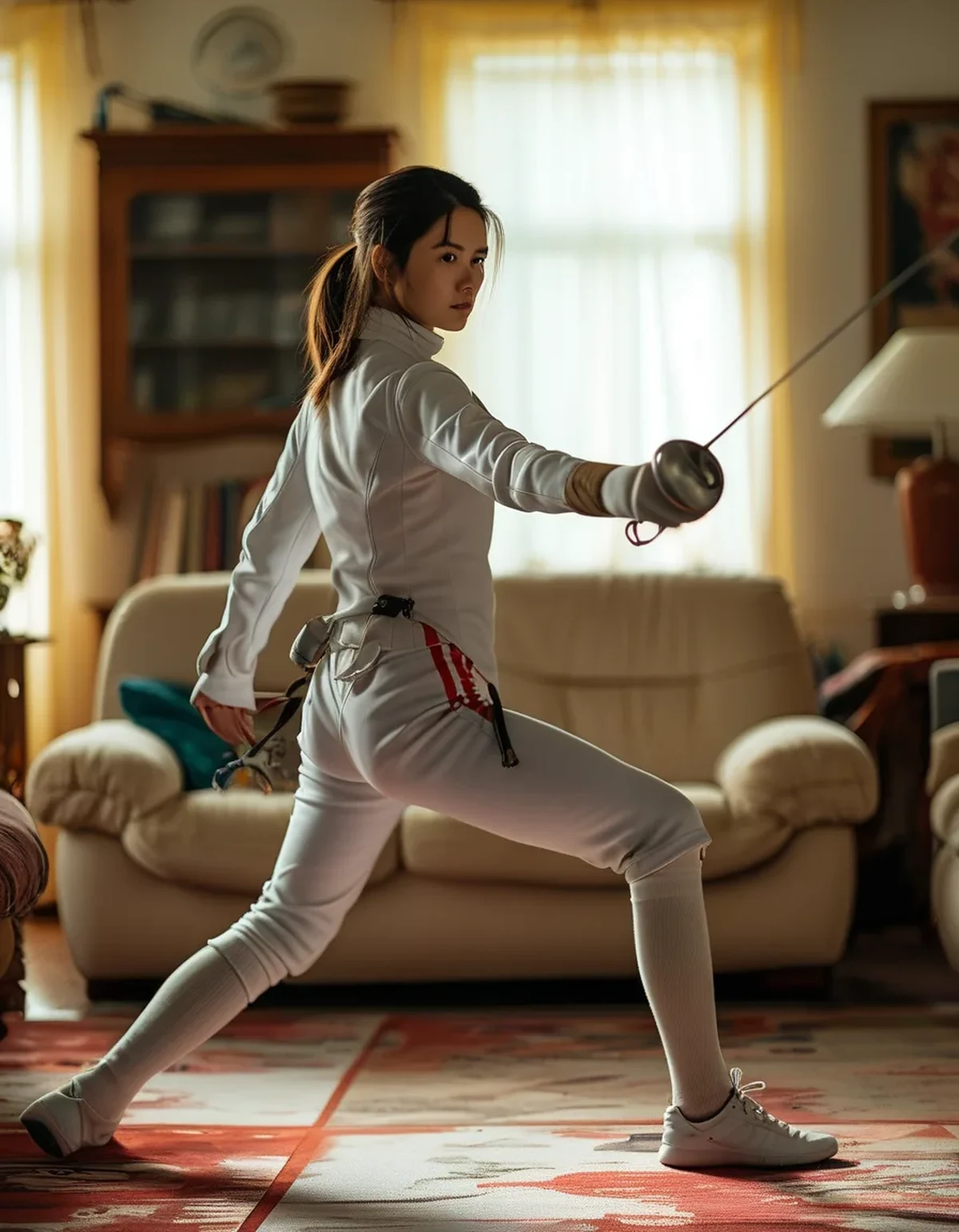
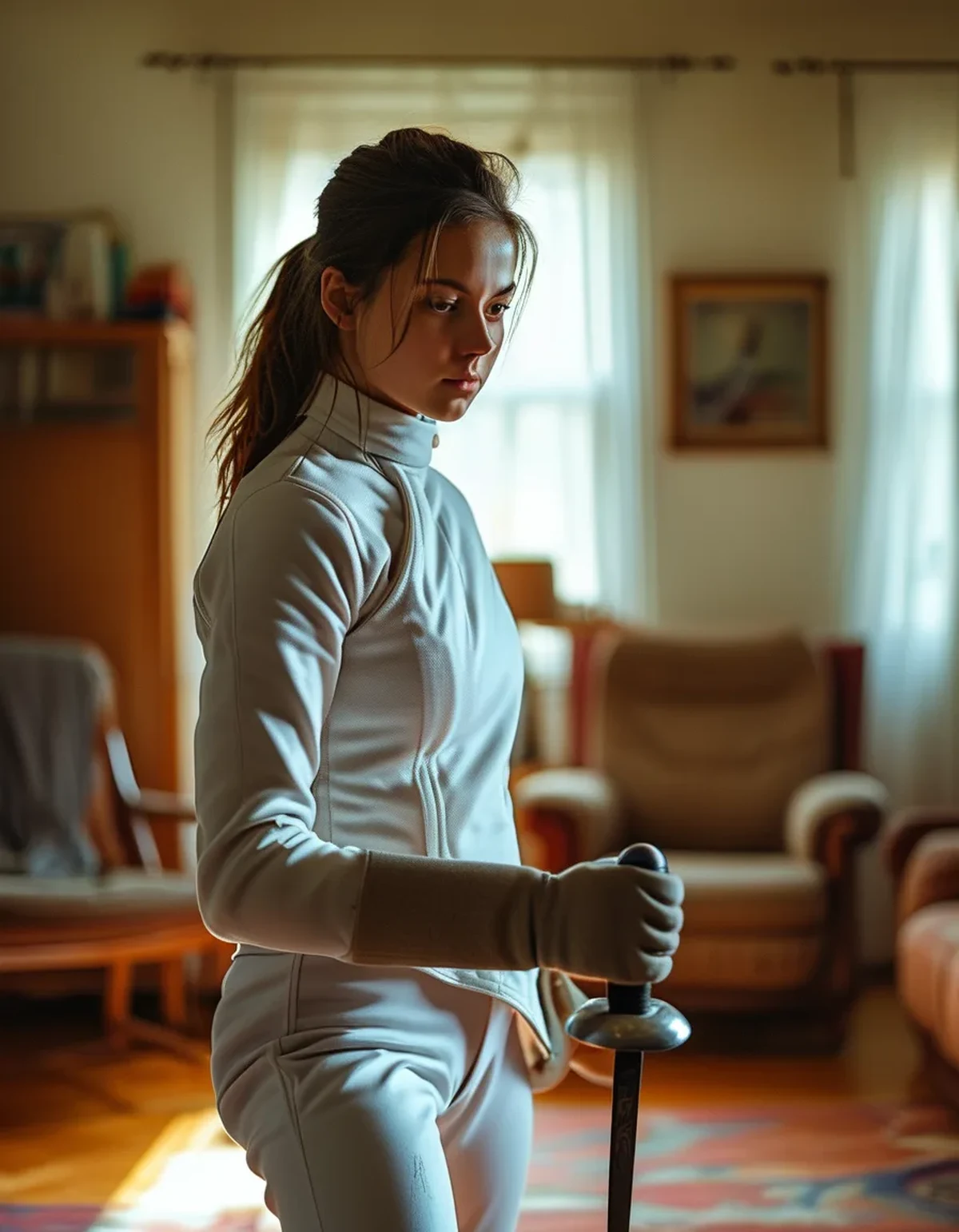
Stance quality, which is the foundation of everything else. A correct en garde - weight balanced, knees bent and staying bent, torso upright, back heel behaving - is trained by holding and moving in it, and holding requires no space at all.
Change of direction, which decides more exchanges than speed does. An advance immediately followed by a retreat, repeated, trains the ability to reverse without a hitch. Two metres is enough for a short advance and retreat pair.
Tempo control, which is the hardest thing to rebuild after a break. Practising deliberately varied rhythms - two slow, one fast, pause, fast - is entirely a timing exercise and needs no floor at all.
Leg endurance in the fencing position, which is why your footwork degrades in the third bout. Isometric holds in a deep en garde address exactly the fatigue pattern that makes parries slow late in a competition.
Balance under load, especially on the back leg. Slow, controlled half-lunges and returns build the eccentric strength that makes recovery from a lunge fast.
What does not transfer: distance judgement, reaction to a real blade, and the specific pressure of an opponent who is also moving. Do not pretend home practice replaces club time - it maintains the base so club time can be spent on the things only club time provides.
The 20-minute home session
Minutes 0 to 3: en garde and posture check. Get into position facing a mirror or a reflective window. Check knee alignment over the feet, torso upright, shoulders relaxed. Hold for 30 seconds, rest, repeat three times.
Minutes 3 to 8: advance-retreat pairs. One advance immediately followed by one retreat, returning to the same spot. Twenty pairs, slowly, with attention to whether your height changes. Rising up between steps is the single most common fault and it is visible in a window reflection.
Minutes 8 to 12: tempo ladder. Three advances at slow tempo, three at medium, three fast, then reverse the sequence with retreats. The goal is changing tempo cleanly, not moving quickly.
Minutes 12 to 16: half-lunge and recover. A shortened lunge to a fixed mark on the floor, then a controlled recovery to en garde. Ten each set, three sets. Recovery speed is the trained quality here, not lunge distance.
Minutes 16 to 19: isometric hold under fatigue. Deep en garde, hold 45 seconds, rest 30, repeat three times. This is the least enjoyable part and the one that shows up most clearly in the third bout of a competition.
Minutes 19 to 20: calf and hip flexor stretch. Both take load in fencing stance and both shorten over a session. Thirty seconds each side.
Three sessions a week maintains a base. It will not build a competitive edge on its own, but it means the first club session back is a training session rather than a recovery session.
5 Mistakes People Make Practising Footwork at Home
Mistake 1: Rising out of the stance between steps. The most common fault in home practice, and it is self-reinforcing because there is no coach to see it. Practise beside a window or a mirror and watch your head height rather than your feet.
Mistake 2: Going for speed before quality. Fast, sloppy footwork practised alone becomes fast, sloppy footwork on the strip. Slow and correct for the first two weeks back is not a compromise, it is the whole method.
Mistake 3: Only practising forward. Retreat quality decays faster than advance quality over a break, and it is the one that loses points. Weight the session toward retreats and direction changes.
Mistake 4: Practising on carpet only. A rug offers grip that a strip does not, and footwork calibrated to high-friction flooring feels wrong on a piste. Practise on a hard floor when you can, even if the space is smaller.
Mistake 5: Skipping the boring isometric work. Everyone does the movement drills and nobody does the holds, which is why late-bout leg fatigue is so widespread. It is three minutes and it is the highest-value part of the session.
The one that catches most returning fencers is the third. Everyone rebuilds their advance and then wonders why they are getting pushed off the end of the strip.
What about coming back after a summer break?
Expect footwork to have decayed faster than blade work. Legs lose conditioning quickly, and the fencing stance is a demanding position that nothing else in ordinary life resembles.
Two weeks of home footwork before the first club session changes that session entirely. Arriving with legs that can hold en garde means you spend the evening fencing rather than surviving.
Reintroduce lunging volume gradually. The lunge is where returning fencers pick up hip flexor and hamstring strains, precisely because it is the movement they did not practise over a break.
Expect the first bouts back to feel slow. Distance judgement is the thing home practice cannot maintain, and it comes back within a few sessions of actual opposition.
September clubs are busy, which is a good thing. More bodies means more varied opposition, which is exactly what rebuilds distance judgement fastest.
And check your kit before the first session, not at it. Glove, mask, and shoes all deteriorate in storage over a summer, and discovering it at the club costs you the evening.
FAQ: Home Fencing Footwork, Answered
Can you practise fencing footwork at home?
Yes, for stance quality, direction changes, tempo control, and leg endurance - all of which fit in about two metres. What you cannot practise is distance judgement against a moving opponent.
How much space do you need?
About two metres of clear floor is enough for advance-retreat pairs and half-lunges. Full-distance lunging needs more, but it is also the least important thing to train alone.
How often should I do it?
Three sessions of about 20 minutes a week maintains a base between club sessions or across a break. More frequency matters more than longer sessions.
What is the most common home practice mistake?
Rising out of the stance between steps. It is invisible to you and obvious to a coach, so practise beside a window or mirror and watch your head height rather than your feet.
Should I practise on carpet?
A hard floor is closer to a piste. Carpet offers grip that changes the movement, so footwork calibrated on a rug feels wrong on a strip.
TL;DR:
- Stance quality, direction changes, tempo control, and leg endurance all train in about two metres - and they are what decays over a break.
- A 20-minute session: posture holds, advance-retreat pairs, a tempo ladder, half-lunges to a mark, and isometric en garde holds.
- Watch your head height in a window reflection; rising out of the stance is the most common self-taught fault.
- Weight the work toward retreats and direction changes, which decay faster than advances.
- Distance judgement is the one thing home practice cannot maintain - save it for the club, and reintroduce lunge volume gradually.
Keep Reading
This article is for general informational and styling purposes only. Fit, sizing, and product availability may vary.