How to Stop Your Fencing Kit From Smelling
Quick Answer: Fencing kit smells because a plastron, jacket and mask trap sweat against fabric that never gets air, and because the glove and mask lining are almost never washed. The fix in order of impact: unpack the bag within an hour of getting home, hang everything to dry fully, wash the plastron and jacket every two to three sessions on a cold cycle with no softener, hand-wash the glove, and clean the mask bib and pad every fortnight.
Nobody warns you at your first lesson that the sport comes with a laundry problem. You are wearing a base layer, a plastron, a jacket, sometimes a lamé, plus a glove and a mask, and none of it breathes.
Then it all goes into a closed bag and sits in a car boot until Thursday.

Why does fencing kit smell worse than other sports gear?
Three conditions, all of them unusual, all present at once.
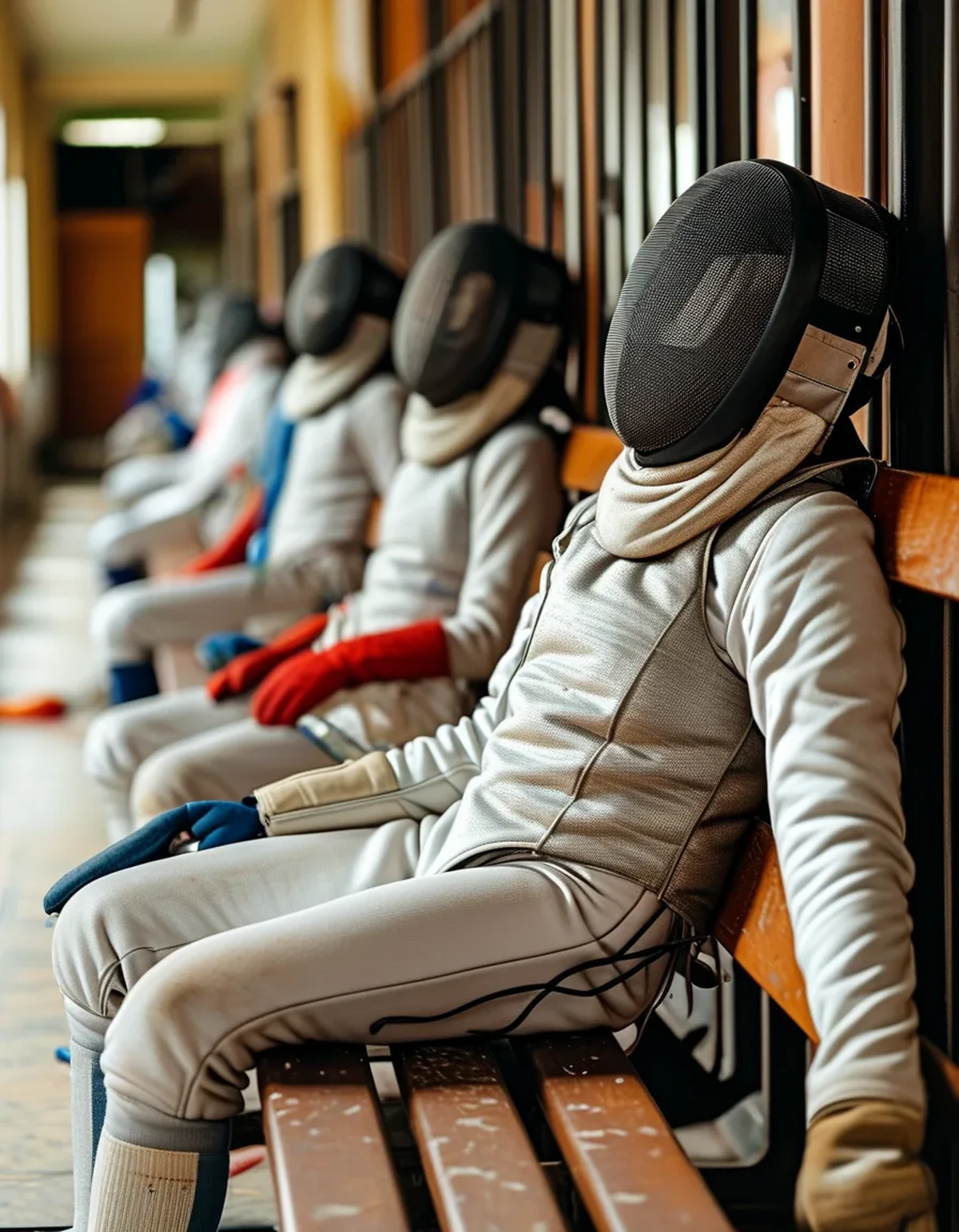
Layering with no airflow. Fencing whites are built to resist puncture, which means dense, tightly woven fabric. A plastron under a jacket produces a double layer of exactly that over the whole torso and the weapon arm. Sweat has nowhere to evaporate to, so it sits against fabric at body temperature for the entire session.
Equipment that is never washed. The jacket gets washed. The glove, the mask, the mask bib, and the lamé usually do not, because nobody explains how — and those are the items in direct, repeated contact with the sweatiest parts of you. The mask pad sits against a forehead for two hours. The glove is inside a closed hand.
Storage in a sealed bag. A fencing bag is long, dark, poorly ventilated, and typically holds everything from the session until the next one. Damp fabric at room temperature in the dark is an ideal environment for the bacteria that produce the smell.
The smell itself is not sweat — sweat is essentially odorless. It is the byproducts of bacteria metabolizing the compounds in sweat and the oils from skin. That distinction matters practically: if the fabric still contains residue, you have not removed the food source, and the smell returns within a session no matter how well you dried it.
What actually needs to happen, in order of impact
1. Unpack the bag the moment you get home. Not that evening — within the hour. This single habit does more than every product on the market, because it is the difference between four hours of damp warmth and eighteen. If you take one thing from this article, take this.
2. Hang everything to dry completely, spread out. Not folded, not in a pile, not on a radiator. Jacket on a hanger with the front open, plastron on its own hanger, glove opened flat, mask standing bib-down so air passes through it. A fan on the pile for twenty minutes is the fastest version.
3. Wash the plastron and base layer every session. These are the two items in direct contact with skin under the most heat, they are the cheapest to replace, and they are the origin of most of the smell.
4. Wash the jacket every two to three sessions. Cold or 30°C, inside out, zipped up so the zip does not catch, no fabric softener under any circumstances. Softener leaves a coating that traps residue and is the single most common reason a freshly washed jacket still smells the moment it warms up. Hang to dry away from direct sun — heat and UV degrade the fabric and shrink it, and a shrunk jacket fails a fit check.
5. Hand-wash the glove. This is the item people never do and the one that is often the actual source. Warm water, a little detergent, work it through the lining with the glove on your hand, rinse thoroughly, press in a towel, then stuff loosely with kitchen paper and air-dry away from heat. Two days to dry properly, which is why you want to do it after the last session of the week.
6. Clean the mask bib and pad every fortnight. Most modern masks have a removable, washable liner and bib — check yours, because a lot of fencers never discover this. If it is not removable, wipe the pad with a cloth and a mild disinfectant solution, and let the whole mask dry standing up. Never put a mask in a washing machine or submerge it: the mesh will rust, and a rusted mesh fails inspection.
What about the lamé and the wires?
Different rules, because these are electrical items.
The lamé must not go in a washing machine. It is a mesh of conductive metal thread and a machine wash will break the conductive path and end its life. What you do instead: after each session, hang it to dry fully, and wipe it down with a cloth dampened with water — or a very dilute vinegar solution if it has gone tarnished — then dry it immediately. Some fencers use a barely-damp cloth with a drop of mild detergent; the key in all versions is that it does not stay wet.
A base layer under the lamé is the real solution. The lamé is the item you can least easily clean, so the strategy is to stop sweat reaching it. A long-sleeved technical base layer plus the plastron keeps most moisture off the conductive layer entirely.
Body wires and mask cords need nothing but drying and coiling loosely. The failure mode with these is not smell, it is mechanical — tight coiling breaks the wire at the plug, which then produces intermittent faults nobody can diagnose on the piste.
Storage between sessions: everything out of the bag, on hangers, somewhere with airflow. The bag itself should be left open and empty. A fencing bag that permanently contains kit is a fencing bag that is permanently contaminating clean kit, and it also needs washing occasionally — most are machine washable on a cold cycle if you take the stiffeners out.
5 Mistakes Fencers Make With Their Kit
1. Using fabric softener. It coats the fibers, traps residue, reduces breathability further, and makes the smell permanent. This is the mistake most likely to be actively making things worse.
2. Washing hot to kill the smell. Hot water sets protein residue rather than removing it, and it shrinks whites. Cold plus a proper detergent plus a longer cycle removes more.
3. Drying on a radiator or in a tumble dryer. Heat damages the puncture resistance of the fabric over time and shrinks the jacket, and a jacket that has shrunk out of fit is an expensive mistake.
4. Leaving the mask in the bag. The mask spends the session absorbing everything from a face and then goes into the darkest, least ventilated container available. It is also the item where the consequence of moisture is rust on the mesh, which is a safety issue rather than a comfort one.
5. Treating the smell as inevitable. It is genuinely not. Fencers who unpack immediately, wash the plastron every session and hand-wash the glove monthly report the problem essentially disappearing. The reason it seems inevitable is that almost nobody is told any of this on day one — and the third item on this list is the one that quietly costs the most money.
FAQ: Fencing Kit Care Questions, Answered
Can I use a sports-specific detergent?
Yes, and they help. The ones formulated for synthetic athletic fabric are designed to remove body oils rather than to mask them, which is the relevant problem. A cheaper equivalent is a wash with half a cup of white vinegar in place of detergent, once a month, to strip accumulated residue.
How do I get the smell out of a jacket that already has it badly?
Soak in cold water with a cup of white vinegar for an hour, then wash normally with a good detergent and no softener, then dry fully in the air. If it survives that, an enzyme-based pre-soak product is the next step. If it survives that too, the residue is likely in the padding and the jacket is near the end of its life.
How often do whites actually need replacing?
Fabric integrity, not appearance, is what matters — and jackets and plastrons have a finite life. Any sign of thinning, a tear, or a repair near a target area means it goes. A yellowed but structurally sound jacket is a cosmetic problem.
What is the minimum I can get away with if I fence three times a week?
Two plastrons and two base layers in rotation, jacket washed weekly, glove hand-washed fortnightly, mask liner monthly, and everything out of the bag within the hour every single time. That last part is not optional and it is free.
TL;DR:
- Fencing kit smells because dense layered fabric traps sweat, the glove and mask are never washed, and it all lives in a sealed bag.
- Unpacking the bag within an hour of getting home does more than any product.
- Wash the plastron every session, the jacket every two to three, cold, inside out, never with softener.
- Hand-wash the glove and clean the mask bib and pad regularly; never machine-wash the mask or the lamé.
- Store everything on hangers with airflow, and leave the bag open and empty.
None of this takes more than five minutes a week once it is a habit. The version that costs you time is the one where you fix it after it has already set in.
Keep Reading
This article is for general informational and styling purposes only. Fit, sizing, and product availability may vary.