The Mental Side of Fencing: Reading an Opponent Before You Ever Cross Blades
Quick Answer: Reading a fencing opponent starts with observing their tendencies in the first few touches (do they attack first or wait, do they favor a particular target or distance) rather than relying purely on reflexes, and adjusting your own timing and distance based on those early observations tends to matter more for winning close bouts than raw technical speed alone.
Beginners often focus almost entirely on their own technique, but experienced fencers consistently point to reading the opponent as the skill that separates close, competitive bouts from lopsided ones.

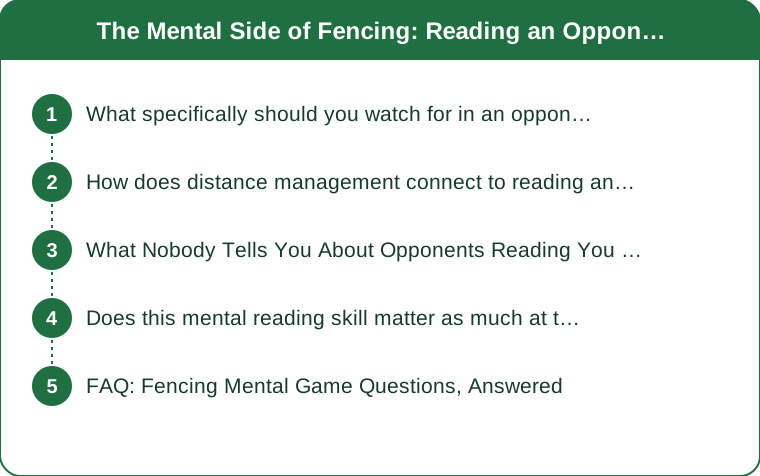
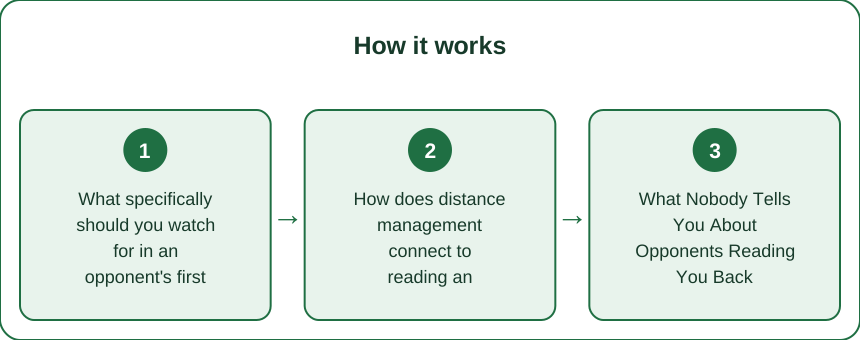
What specifically should you watch for in an opponent’s first few touches?
Whether they tend to initiate attacks or wait for you to commit first, their preferred distance (do they close in aggressively or prefer to fight at a longer range), and any consistent tell before an attack (a small forward lean, a specific blade movement) are all useful early signals that inform how to approach subsequent exchanges.
How does distance management connect to reading an opponent?
Once you’ve identified whether an opponent prefers close or long-distance engagement, deliberately fencing at the range that’s less comfortable for them (staying just outside their preferred attacking distance, for example) forces them to adjust to your terms rather than fighting entirely on theirs.

What Nobody Tells You About Opponents Reading You Back
Reading an opponent is a two-way process — a more experienced opponent is likely reading your own tendencies simultaneously, which is why occasionally varying your own patterns (even ones that have worked well earlier in the bout) prevents an opponent from successfully reading and countering you in return.
Does this mental reading skill matter as much at the beginner level?
Yes, though it looks simpler — even beginner bouts have observable patterns (a tendency to lunge at a predictable moment, a preference for retreating rather than counter-attacking), and consciously noticing these, rather than fencing purely on instinct each touch, gives even new fencers a meaningful tactical edge.
FAQ: Fencing Mental Game Questions, Answered
How many touches does it usually take to read a new opponent?
Many experienced fencers report getting a useful read within the first 2-3 touches, though a full, more nuanced picture often develops further across the bout.
Can coaches help develop this reading skill specifically?
Yes — coaches can often point out patterns in real time during practice bouts that are harder to notice from inside the bout yourself, making guided practice valuable for developing this skill faster.
Does video review help with reading opponents in future matches?
Yes, particularly for fencers who compete against the same opponents repeatedly — reviewing footage can reveal patterns not obvious in the moment, informing strategy for a rematch.
TL;DR:
- Watching an opponent’s first few touches for attack timing and preferred distance provides real tactical information
- Deliberately fencing at a range uncomfortable for the opponent shifts the bout onto your terms
- Varying your own patterns prevents an opponent from successfully reading you back
- This reading skill applies even at the beginner level, not just among experienced competitors
Technique gets a fencer in the door, but reading an opponent’s tendencies is frequently what decides genuinely close bouts.
Keep Reading
This article is for general informational and styling purposes only. Fit, sizing, and product availability may vary.