How Fencers Actually Read an Opponent (It's Not Mind Reading)
Quick Answer: Fencers ‘read’ opponents by tracking three visible patterns — foot pressure before a lunge, blade tension before an attack, and repeated tempo habits — not by guessing. New fencers can start consciously tracking these within a few weeks of regular bouting.
Watching an experienced fencer parry an attack before it fully lands looks like a magic trick. It isn’t — it’s pattern recognition built from watching the same three tells over and over, and beginners can start training the same eye early.

What are fencers actually looking at during a bout?
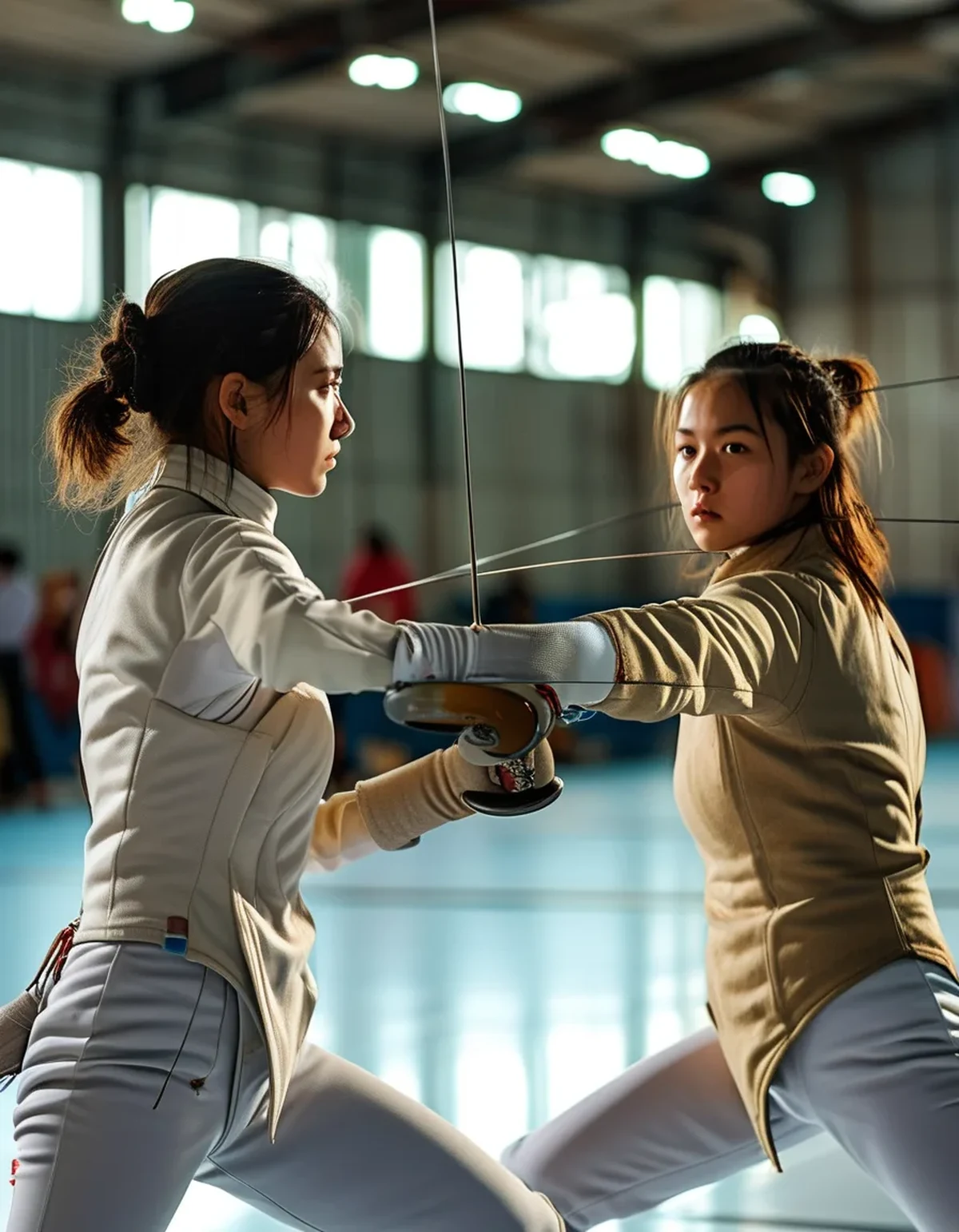
Three things, in order of reliability: front foot pressure (weight shifting forward telegraphs a coming lunge), blade tension (a stiff, held blade often precedes an attack more than a relaxed one), and breathing/tempo changes (a held breath right before an action is a classic tell).
None of these are mystical — they’re just small physical signals most beginners are too focused on their own footwork to notice yet.
How do you train yourself to notice these patterns?
Watch bouts you’re not fencing in. Sitting out and just observing removes the pressure of your own execution and frees attention to study someone else’s tells — most fencers improve their reading faster from watching than from drilling.
In your own bouts, pick one single tell to track for an entire practice (just front foot pressure, for example) rather than trying to read everything at once. Layer in the second tell once the first becomes automatic.
Myth vs Fact: Reading Opponents in Fencing
Myth: Advanced fencers react faster than beginners. Fact: Reaction speed barely changes with experience. What changes is prediction — advanced fencers act on the tell before the attack fully starts, which only looks like faster reflexes.
Myth: You need years of bouting before pattern-reading works. Fact: Most fencers can consciously spot front-foot loading within a single season of focused observation — it’s a trainable skill, not innate talent.
Myth: Every opponent has the same tells. Fact: Tells are individual habits. The real skill is recalibrating fast against a new opponent in the first minute of a bout rather than assuming yesterday’s patterns apply.
What should a beginner practice first?
Start with a training partner doing isolated, telegraphed lunges at half speed while you call out the tell you noticed before they moved. This builds the eye without bout pressure.
Then move to full-speed bouts where your only goal for that round is noticing, not scoring — resist the urge to react yet. Reading and reacting are two separate skills that get muddled if trained together too early.
FAQ: Fencing Tactics Questions, Answered
Can reading an opponent be taught, or is it instinct?
It’s trainable. Coaches regularly drill tell-recognition as a specific skill, separate from footwork or blade work.
Does video review help with reading opponents?
Yes, significantly — slow-motion video of your own bouts often reveals tells you missed live, both your opponent’s and your own.
How long before reading opponents feels natural instead of effortful?
Most fencers report it clicking somewhere in their second season of regular competitive bouting, though isolated tells can be spotted much sooner.
TL;DR:
- Fencers read front-foot pressure, blade tension, and tempo — not magic reflexes
- Watching bouts you’re not in trains the eye faster than drilling your own
- Track one tell at a time before layering in more
- The skill is prediction, not faster reactions — and it’s learnable within a season
The next bout you watch, pick one tell and just track it — that’s the whole training method.
Keep Reading
This article is for general informational and styling purposes only. Fit, sizing, and product availability may vary.